Affiliate disclosure: This article contains affiliate links. If you use our links to explore business-selling services, CustomerCare Guide may earn a commission at no additional cost to you.
Selling a business is a major decision. Whether you own a retail shop, restaurant, manufacturing company, service business, or online store, finding the right buyer requires preparation and effective marketing.
Simply deciding to sell is not enough. Potential buyers need to understand what your business does, how it operates, what makes it attractive, and whether it matches their acquisition goals.
One way to reach potential buyers is to advertise your business through a specialist business-for-sale marketplace.
In this guide, you will learn how to prepare a business listing, present your opportunity professionally, protect confidential information, and compare selling options, including pay-as-you-go listing plans.
Why Advertise Your Business for Sale Online?
Traditionally, business owners might rely on personal contacts, local networks, or business brokers to find potential buyers. Online marketplaces offer another way to present a business to people actively exploring acquisition opportunities.
Depending on the platform and the listing plan, online advertising may help you:
- Present your business to potential buyers beyond your immediate network.
- Explain your business model, assets, and market position.
- Share relevant financial information with appropriate safeguards.
- Receive enquiries from interested parties.
- Compare different ways to market your business.
Advertising does not guarantee that a buyer will contact you or that a sale will be completed. Results depend on factors such as the business, asking price, listing quality, market conditions, and buyer demand.
Step 1: Prepare Your Business Before Advertising
Before publishing a listing, organise the information a potential buyer is likely to request.
Gather your business information
Prepare a clear summary covering:
- The industry and type of business
- The products or services offered
- The length of time the business has operated
- The general location or markets served
- The business model and customer base
- The assets or equipment included in the sale
- The reason for selling, if you are comfortable sharing it
- Potential opportunities for a new owner
Keep the information factual. Avoid unsupported claims about profitability, market leadership, or future growth.
Organise your financial records
Potential buyers may want to review financial information before making an offer.
Depending on your business, prepare relevant records such as profit-and-loss statements, revenue summaries, cash-flow information, tax records, details of liabilities, and an overview of major operating expenses.
Make sure the figures are consistent and supported by documentation.
Do not publish sensitive financial documents openly. Share detailed records through an appropriate process when there is a genuine buyer and suitable confidentiality protection.
Decide what is included in the sale
Clarify whether the proposed sale includes equipment, inventory, intellectual property, software, customer contracts, premises, or other assets.
If certain assets are excluded, make that clear during negotiations.
Step 2: Establish a Realistic Asking Price
Your asking price influences which buyers consider your business.
Setting the price too high may discourage interest, while pricing too low could leave you with less than the business is worth.
Consider the following factors:
- Historical earnings and cash flow
- Assets and liabilities
- Industry conditions
- Customer concentration and recurring revenue
- Dependence on the current owner
- Growth prospects and operational risks
- Comparable businesses, where reliable information is available
Revenue alone is not enough to determine a business's value. Two businesses with similar sales can have very different profit margins, liabilities, and risk profiles.
Consider seeking an independent valuation or advice from a qualified professional if you are uncertain about the appropriate asking price.
Some business-selling services provide pricing guidance as part of their plans. Understand whether this is general guidance or a formal independent valuation before relying on it.
Step 3: Write a Clear Business-for-Sale Listing
Your listing is often the first detailed introduction a potential buyer receives. Make it informative, specific, and easy to understand.
Create a descriptive headline
A useful headline identifies the business type and, where appropriate, its location or distinguishing feature.
For example:
Established Commercial Cleaning Business Available for Acquisition
This is more informative than a vague headline such as “Excellent Business Opportunity.”
Only include claims that accurately describe your business.
Explain what the business does
Write a concise overview of the products or services you provide, the customers you serve, and how the business operates.
Avoid unnecessary jargon. A buyer who is unfamiliar with your industry should still be able to understand the opportunity.
Include relevant financial highlights
Where appropriate and supported by records, include key financial information such as annual revenue, profit measures, and the asking price.
Explain the financial figures accurately. If you use adjusted earnings, be prepared to show how the adjustment was calculated.
Describe the opportunity honestly
Explain the business's strengths, established processes, assets, or potential areas for development.
Do not present hypothetical growth as guaranteed. Buyers will make their own assessment of future performance.
Add suitable images
Use clear, relevant photographs of premises, equipment, products, or other assets that help explain the business.
Before uploading images, ensure you have permission to use them and remove information that could reveal confidential details unintentionally.
Step 4: Choose Where to Advertise Your Business
You can market a business through several channels, depending on your goals and budget.
Your existing professional network
Industry contacts, suppliers, advisers, and professional networks may know people interested in acquiring a business.
These relationships can be useful, but they may not reach buyers outside your existing network.
Business brokers
A broker may assist with preparing the sale, finding potential buyers, handling enquiries, and negotiating terms.
Compare the services, fees, responsibilities, and contractual terms before appointing a broker.
Specialist business-for-sale marketplaces
A specialist marketplace provides a dedicated place to present your business to people researching acquisition opportunities.
World Businesses for Sale is one option to consider. Its website offers business listings and seller plans designed to help owners advertise their businesses and reach potential buyers.
You can explore the platform here:
Explore World Businesses for Sale
Review the available plan features, pricing, and terms to decide whether the service fits your requirements.
Multiple marketing channels
You may also consider professional networks, relevant industry groups, or direct outreach where appropriate.
Choose channels that suit your business and target buyer. Using more channels can broaden your exposure, but it also requires time to manage enquiries and keep information consistent.
Step 5: Understand Pay-As-You-Go Business-Selling Plans
Some business owners prefer a listing service with an upfront fee rather than a commission based on the eventual sale price.
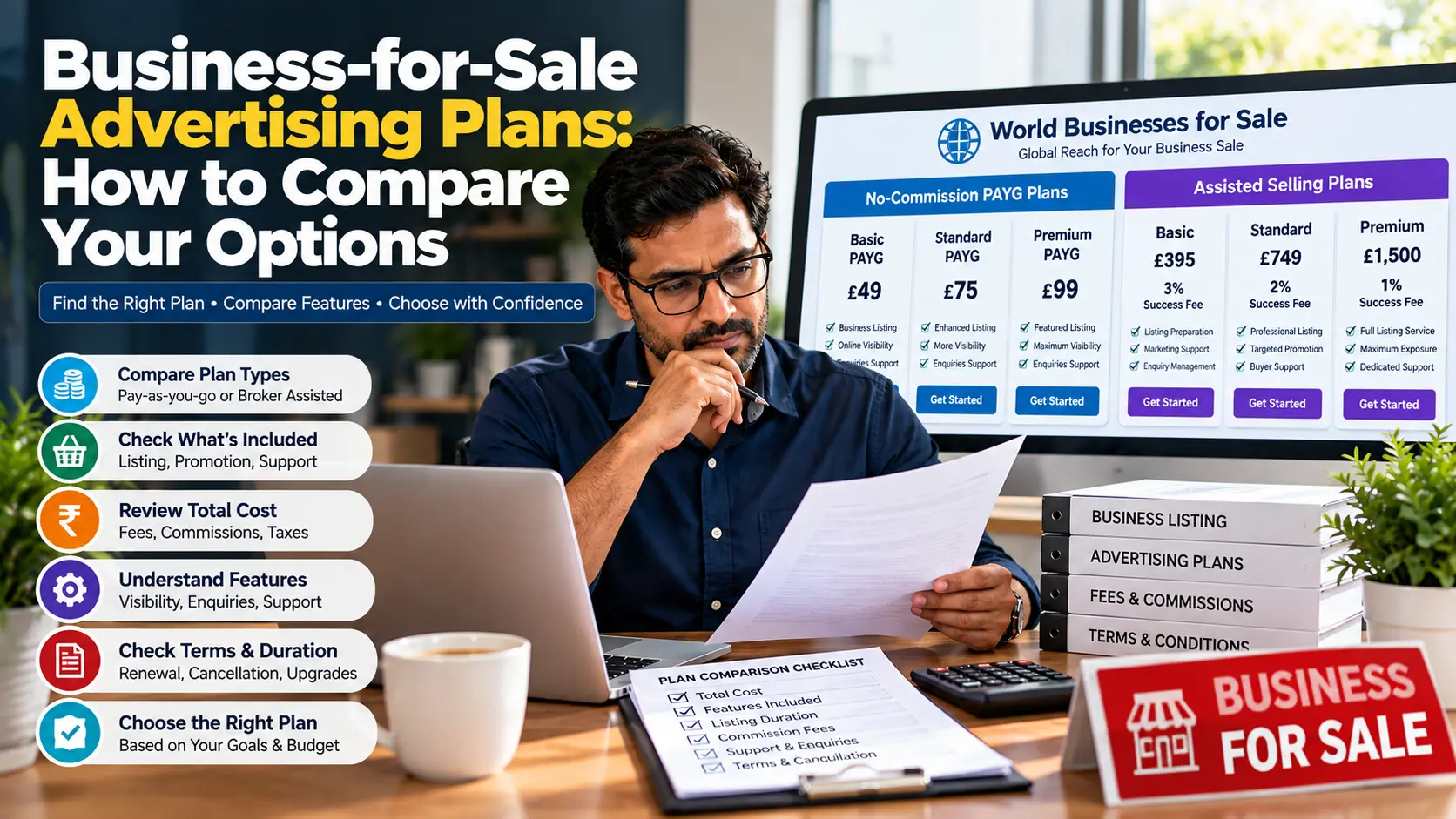
World Businesses for Sale offers pay-as-you-go selling plans advertised without commission on completion. The platform currently displays three headline options:
| Plan | Displayed price |
|---|---|
| Basic PAYG | £49 |
| Standard PAYG | £75 |
| Premium PAYG | £99 |
These are the headline prices displayed on the platform when this article was prepared. Prices, taxes, plan terms, and available subscription options can change. Check the current listing and checkout details before purchasing.
Basic PAYG plan
The Basic option is positioned for sellers looking for an entry-level listing service.
Review the current plan description to understand the listing assistance, buyer access, and other features included.
Standard PAYG plan
The Standard option is intended for sellers who want additional listing visibility or support compared with the entry-level option.
Check the current feature list to confirm the specific benefits included before deciding whether the upgrade is worthwhile.
Premium PAYG plan
The Premium option is positioned for sellers seeking additional marketing assistance and listing support.
The published description includes features such as listing preparation and strategic marketing. Review the latest terms to confirm the exact services available.
Compare the total cost, not just the headline price
Before selecting a plan, check:
- The price and currency
- The duration of access
- Whether the payment is one-time or recurring
- Cancellation terms
- Listing preparation and marketing services
- Any optional upgrades or additional costs
- What happens when the listing period ends
The platform describes monthly and six-month options as well as one-month access, with savings advertised for certain terms. Confirm the current conditions before committing.
A no-commission plan does not mean the listing is free. It means the advertised pricing model uses listing fees rather than a commission charged on completion, subject to the applicable plan terms.
Step 6: Protect Your Business's Confidentiality
Business owners may be concerned that employees, customers, suppliers, or competitors will discover that the business is for sale.
You can reduce unnecessary disclosure by managing the information you publish and share.
Consider these precautions:
- Avoid publishing your business name or exact address if confidentiality is important and the platform allows anonymous listings.
- Remove sensitive details from public photographs and documents.
- Share detailed financial records only when appropriate.
- Use a suitable non-disclosure agreement before providing confidential information.
- Verify a potential buyer's identity and intentions before sharing sensitive documents.
- Consult a lawyer about confidentiality requirements and transaction risks.
Do not assume that every marketplace or plan offers identical confidentiality controls. Confirm how the particular service handles public listings and buyer enquiries.
Step 7: Respond Professionally to Buyer Enquiries
Once your listing is live, prepare to manage enquiries.
Respond clearly and promptly, and keep a record of the questions potential buyers ask.
You may want to prepare answers about:
- The products and services offered
- The business's operating history
- Its general financial performance
- The assets included in the sale
- The reason for selling
- The expected transition period
- The next steps for reviewing confidential information
Not every enquiry will lead to a serious offer. You can ask suitable screening questions to understand whether a prospective buyer has a genuine interest and the resources to pursue the transaction.
Before sharing sensitive documents, take appropriate steps to protect confidentiality.
Step 8: Evaluate Buyer Interest Carefully
Receiving an enquiry is not the same as receiving a viable offer.
Assess potential buyers based on their interest, ability to proceed, proposed terms, and willingness to complete appropriate checks.
Be cautious about:
- Buyers who refuse reasonable identity or credibility checks
- Pressure to transfer money before proper agreements are in place
- Requests for sensitive information without a clear purpose
- Offers with unclear payment conditions
- Promises that appear unrealistic or difficult to verify
Seek professional advice when reviewing significant offers or negotiating complex transaction terms.
Step 9: Prepare for Due Diligence and Negotiation
When a buyer becomes seriously interested, they may want to examine your financial records, contracts, assets, liabilities, licences, and operating processes.
Organise the relevant documents so they can be reviewed securely.
You may need assistance from an accountant, lawyer, or other specialist to answer questions and prepare the transaction documents.
Clarify the proposed purchase price, assets included, liabilities, payment arrangements, conditions of sale, and any transition support.
Do not treat an advertised asking price or initial offer as a completed agreement. The final terms must be documented and reviewed appropriately.
A Business-Selling Preparation Checklist
Before advertising your business, check that you have:
- Prepared a clear business summary.
- Organised relevant financial records.
- Considered an appropriate asking price.
- Identified the assets included in the sale.
- Prepared suitable photographs and supporting information.
- Decided how to protect confidential information.
- Compared advertising channels and plan features.
- Checked current listing prices and terms.
- Prepared a process for responding to enquiries.
- Considered professional support for valuation, due diligence, and legal matters.
You do not need every document ready before exploring advertising options. However, preparing early can make it easier to answer serious buyer questions.
Frequently Asked Questions
Where can I advertise my business for sale?
Options include specialist business-for-sale marketplaces, business brokers, professional networks, and relevant industry contacts. Compare their audiences, services, fees, and terms before deciding.
What is a pay-as-you-go business-selling plan?
A pay-as-you-go plan generally allows a seller to purchase a defined listing service or period of access without relying solely on a commission payable when the business sells. Check the individual plan's payment and cancellation terms.
Does World Businesses for Sale charge commission when a business sells?
The platform advertises specific PAYG plans without commission on completion. Review the current terms for the plan you select, and distinguish these plans from any separate commission-based services.
Will advertising guarantee that my business sells?
No. Advertising can help present a business to potential buyers, but it cannot guarantee enquiries, an acceptable offer, or a completed sale.
How should I price my business?
Consider earnings, cash flow, assets, liabilities, industry conditions, and comparable businesses where reliable information is available. Professional valuation advice may be useful.
Can I advertise my business confidentially?
Some platforms provide options to limit identifying information in public listings. Confirm the available privacy features and use appropriate safeguards before sharing sensitive information.
What should I do after receiving an enquiry?
Respond professionally, assess whether the buyer appears genuine, and share confidential information only through an appropriate process. Seek legal and financial advice before agreeing to significant transaction terms.
Final Thoughts
Advertising a business for sale is an important part of preparing for a potential exit. A clear listing, realistic asking price, organised records, and thoughtful confidentiality measures can help you present your business professionally.
Compare different marketing channels and review the actual services included in each listing plan. Pay-as-you-go options may suit owners who prefer an upfront listing fee, while other sellers may want broker assistance or a different service structure.
There is no single approach that works for every business. Choose the option that fits your budget, confidentiality requirements, and level of support needed.
Ready to explore your selling options?
Explore Business-Selling Plans at World Businesses for Sale
CustomerCare Guide provides general informational content and is not a legal, financial, valuation, or business-brokerage adviser. Listing fees and plan terms may change. Obtain independent professional advice before making significant decisions about selling your business.