Finding the right buyer is an important part of selling a business. While advertising can help you reach people interested in business ownership, not every enquiry will come from someone who is ready or financially able to complete a purchase.
The goal is to present your business clearly, reach a relevant audience, and establish a process for identifying serious prospects. Good preparation can make conversations more productive and help you manage the selling process professionally.
Affiliate disclosure: This article contains an affiliate link. If you purchase through the link, we may earn a commission at no additional cost to you.
1. Understand What Serious Buyers Look For
Buyers evaluate businesses for different reasons. Some want an established source of income, others are looking for expansion opportunities, and some want to enter a new industry.
Depending on their objectives, buyers may consider:
- The business's financial performance
- Its products, services, and customer base
- Market position and competitive advantages
- Operating costs and staffing requirements
- Existing contracts and supplier relationships
- The owner's involvement in daily operations
- Potential risks and realistic growth opportunities
Think about what makes your business attractive to a suitable buyer. Focus on genuine strengths supported by evidence rather than making broad claims.
2. Set a Realistic Asking Price
Pricing can influence both the number and quality of enquiries your listing receives.
An asking price that is difficult to justify may discourage potential buyers. A price that is too low could mean missing out on value you have built.
Before advertising, review:
- Recent financial performance
- Profitability and cash flow
- Assets, liabilities, and outstanding debt
- Industry conditions
- Comparable businesses, where reliable information is available
- The business's reliance on its owner
- Any significant risks or opportunities
Consider getting advice from an accountant, business valuer, or experienced transaction adviser. The right valuation method depends on the type and circumstances of your business.
Be prepared to explain how you arrived at the asking price. Avoid treating future projections as guaranteed results.
3. Prepare a Clear and Persuasive Listing
Your business listing is often the first detailed introduction a potential buyer receives. It should make the opportunity understandable without overwhelming readers with unnecessary information.
Include the following elements.
A specific headline
Describe the type of business and its main appeal. Avoid exaggerated phrases that cannot be substantiated.
A useful business description
Explain what the business does, whom it serves, how it operates, and what distinguishes it from alternatives.
Accurate financial information
Present relevant revenue, profitability, and trading information for clearly identified periods. Make sure the figures are consistent with your supporting records.
Details about what is included
Clarify whether equipment, inventory, intellectual property, a website, or other assets form part of the proposed sale.
Realistic opportunities
If there is potential to expand into new markets, introduce additional services, or improve distribution, explain the opportunity without promising a particular outcome.
A clear next step
Tell interested readers how to enquire about the opportunity and what information may be available after an initial discussion.
A well-structured listing helps suitable buyers assess whether the business matches their requirements.
4. Advertise Where Relevant Buyers Are Looking
Even a well-prepared listing needs suitable exposure. Consider where people interested in buying your type of business are likely to search.
Potential channels include:
- Online business-for-sale marketplaces
- Industry-specific networks
- Business brokers and professional advisers
- Trade associations
- Relevant business communities
- Your professional network, where appropriate
Each channel has different advantages, costs, and audiences. A local service business may appeal to a different buyer group from a manufacturing company or an online business.
For online advertising, compare the platform's audience, listing features, visibility options, duration, pricing, and enquiry process before committing.
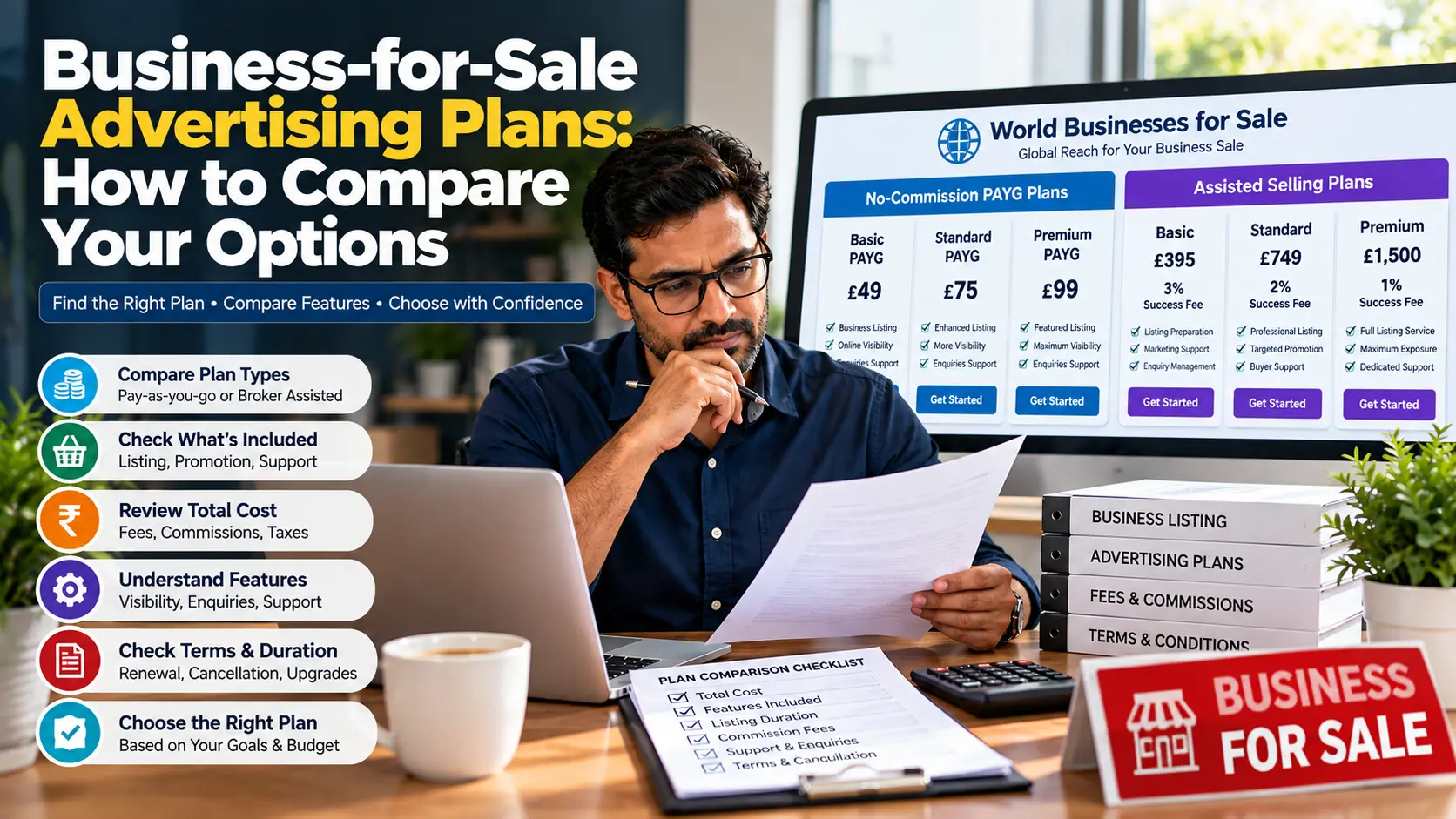
You can explore listing options through World Businesses for Sale. Review the current plans and terms to determine whether the platform suits your business and budget.
Remember that advertising provides an opportunity to reach potential buyers. It does not guarantee enquiries, qualified prospects, or a completed sale.
5. Make Your Business Information Easy to Verify
Serious buyers may want to understand the evidence behind your listing before investing time in detailed discussions.
Organise relevant documents in advance, including:
- Financial statements and tax records
- A list of assets and liabilities
- Details of major customers and suppliers
- Information about employees and key responsibilities
- Relevant licences, registrations, and contracts
- Details of any material disputes or obligations
You do not need to publish confidential documents publicly. Instead, establish a process for sharing appropriate information with suitable prospects as discussions progress.
Accurate records help you answer questions consistently and may reduce avoidable delays during due diligence.
6. Protect Confidentiality During Buyer Enquiries
Some business owners need to keep a potential sale confidential to avoid unnecessary concern among employees, customers, suppliers, or competitors.
Consider using a staged disclosure process.
At the initial enquiry stage: Provide general information that explains the business opportunity without revealing unnecessary sensitive details.
After preliminary screening: Consider sharing additional information with suitable prospects, subject to appropriate confidentiality arrangements.
During due diligence: Provide relevant supporting documents through a controlled process, with professional guidance where needed.
A confidentiality agreement may be appropriate before sharing sensitive information. Its suitability and terms depend on the transaction and applicable law, so seek legal advice where necessary.
Never share personal information, customer records, or commercially sensitive material without considering your legal obligations and the recipient's need for access.
7. Screen Enquiries Professionally
Not every enquiry will lead to a serious offer. A consistent screening process can help you prioritise prospects without making assumptions based on appearance or background.
Depending on the stage of discussion, reasonable questions may include:
- What interests you about this business?
- Do you have experience in this industry or a related field?
- What is your intended purchase timeline?
- Have you considered how you would finance the acquisition?
- What additional information would help you evaluate the opportunity?
Ask questions respectfully and consistently. Financial verification should be proportionate to the stage of the process and handled appropriately.
Be cautious of requests for unusual upfront payments, pressure to bypass normal procedures, or demands for confidential information before the other party has been reasonably assessed.
Where appropriate, involve a qualified adviser in screening and negotiations.
8. Respond to Buyers Promptly
A well-written listing can generate questions that need timely, accurate responses.
Set aside time to review enquiries and keep a record of conversations. A simple spreadsheet can help you track:
- Enquiry date
- Buyer's contact details
- Business information requested
- Current discussion stage
- Follow-up date
- Outstanding questions
- Agreed next steps
Respond professionally, even when a prospect is not a good fit. If you need to verify a figure or document, explain that you will check it rather than guessing.
Avoid sharing inconsistent financial information with different prospects. Keep a reliable record of what has been communicated.
9. Explain the Business's Strengths Without Overpromising
Buyers want to understand not only the business's current performance but also its future possibilities.
Highlight strengths such as established customer relationships, documented processes, specialised equipment, repeat business, or a recognisable market position where these are genuine.
If you identify opportunities for future growth, distinguish them from current results.
For example, you might explain that a business could explore an additional service area, while making clear that expansion would require investment, planning, and market validation.
Honest descriptions build a stronger foundation for negotiations than claims that cannot be supported.
10. Prepare for Due Diligence and Negotiation
A buyer may express interest and still decide not to proceed after reviewing the details. Due diligence allows the parties to examine the business and identify issues that may affect the transaction.
Prepare to discuss the financial position, contracts, assets, liabilities, operations, and any significant risks.
Before accepting an offer, consider more than the headline price. Relevant factors may include:
- The buyer's ability to fund the transaction
- Conditions attached to the offer
- The proposed completion timeline
- Required third-party approvals
- Treatment of inventory, debt, and other assets
- Any requested training or transition support
A letter of intent or verbal offer does not necessarily mean a transaction is complete. The final outcome may depend on due diligence, financing, contracts, and required approvals.
Seek qualified legal, accounting, and transaction advice appropriate to the size and complexity of the sale.
Checklist: Are You Ready to Attract Buyers?
Before promoting your business, confirm that you have:
- Prepared a clear business description
- Reviewed the asking price
- Organised financial records
- Identified the assets and liabilities included in the sale
- Documented key operating processes
- Decided how confidential information will be protected
- Chosen relevant advertising channels
- Compared advertising costs and terms
- Prepared a process for screening and responding to enquiries
- Considered professional support for negotiation and due diligence
You do not have to complete every task alone. The right professional support can be particularly valuable when the business has complex financial arrangements, employees, contracts, or regulatory obligations.
Frequently Asked Questions
How do I find buyers for my business?
You can consider online business-for-sale marketplaces, industry networks, business brokers, professional advisers, and relevant business contacts. The best approach depends on your business type, location, size, and target buyer.
How can I tell whether a buyer is serious?
Look for consistent communication, relevant questions, a credible purchase timeline, and a willingness to follow reasonable screening and confidentiality procedures. Financial capacity may need to be assessed as discussions progress. No single sign guarantees that a buyer will complete the purchase.
Should I disclose my asking price publicly?
That depends on your selling strategy, market, and the platform's listing options. A public price may help buyers assess suitability quickly, while other sellers may prefer to discuss pricing after an initial enquiry. Whichever approach you choose, be prepared to explain your expectations.
Does advertising guarantee a business sale?
No. Advertising can increase exposure, but the outcome depends on factors such as pricing, business performance, buyer demand, financing, due diligence, and the terms negotiated between the parties.
Should I use a business broker?
A broker may help with valuation, marketing, buyer screening, negotiation, and transaction coordination. Some owners handle parts of the process themselves. Consider the complexity of your sale, the time available, and the professional support you need.
Final Thoughts
Attracting serious buyers begins with preparation. A realistic asking price, clear listing, organised records, and professional enquiry management can help potential buyers understand your business and decide whether to explore it further.
Choose advertising channels that fit your target audience, protect confidential information, and evaluate prospects carefully. Most importantly, be accurate about the business's performance and realistic about future opportunities.
If you are ready to explore online business advertising, visit World Businesses for Sale and compare the current options against your selling goals and budget.